Split the Night: Why the Best Beach-Bar Evenings Come in Two Acts
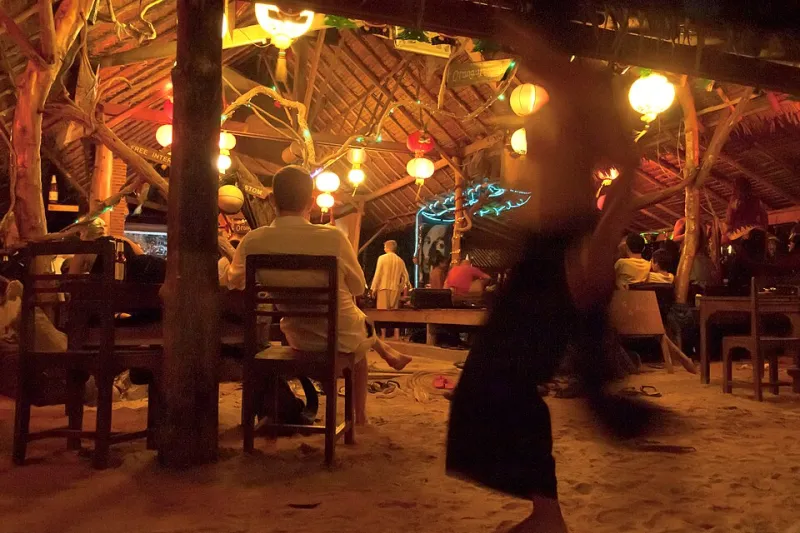
Photo: Vyacheslav Argenberg, CC BY 4.0, via Wikimedia Commons
There is a specific flavor of vacation regret that tastes like a lukewarm rum drink at 9:40 p.m. You claimed the perfect seat at 4:45. You defended it through sunset, through the check drop, through the table reset happening six inches from your elbow. And now the sun is long gone, the view is a black rectangle, and you are still in the chair because leaving felt like admitting something.
It was a great seat. It was a mediocre night.
Here is the case for splitting the evening in two.
The Myth of the Perfect Seat
Most beach bars are built for one hour and survive the rest. Sunset bars are oriented west, engineered around a view, and staffed for a crush that ends the moment the sky goes orange-pink and then gray. Late bars are built for volume, music, and the second wind that shows up around 10. Ask a single venue to do both and you get the sunset scrum plus the post-sunset lull, charged to one tab.
One address, one mood. That is the deal. Fighting it is how people end up paying sunset prices for a midnight experience that never arrives.
Act One: Casting the Golden-Hour Bar
Arrive 45 to 60 minutes before the sun goes down. What you want at this stop is simple: open air, a western or southwestern sightline, no cover or a trivial one, a short drink list, and food that lands fast. A sunset is a deadline, not a suggestion. You do not want to be waiting on a twelve-ingredient craft cocktail at 6:02 when the sun exits at 6:04.
Check the actual sunset time on your phone the morning of. Winter changes the whole plan for a US trip. In late November, Miami goes dark around 5:30 p.m., Key West closer to 5:40, San Juan near 5:50, and San Diego as early as 4:45. That means a two-bar night can reasonably start at 3:30 in California and still leave you four hours of darkness for act two. It also means the handoff happens early enough that nobody is tired yet, which is exactly when splitting the night is easiest.
The question to ask about bar one: does this place exist for the view, or for the night? View bars are wonderful. They are also not where you should be at 10 p.m.
The Handoff Window
The 20 to 40 minutes after sunset is dead time almost everywhere. Checks being dropped, tables being bussed, staff resetting the garnish station, the kitchen deciding whether to keep going. This is your exit ramp, and it is wide open.
My working rule: two drinks maximum at stop one. If you are ordering a third round at the sunset bar, you have already decided to camp, and the rest of this article does not apply to you. Order round two early, drink it slowly, close the tab while the sky is still doing something interesting, and walk out ahead of the crowd instead of behind it.
Act Two: Picking the Moon Bar
The criteria invert completely. At bar two, the view is not the point — the room is. You want music at a volume that permits conversation or dancing, a kitchen that runs past 9, a bartender who is still energetic rather than counting down, and seating that is not entirely aimed at the water. The best moon bars are usually a block or two off the sand, or on a rooftop, or facing east where the sunset crowd never bothered to look.
Pay attention to moonrise, too. The moon comes up roughly 50 minutes later each night, so a moon clearing the horizon at 6:45 is a different plan than one that will not show until 11:20. Early moonrise? Book act two somewhere with an eastern terrace or a rooftop. Late moonrise? It genuinely does not matter — you will be looking at string lights and the back of a bartender's shirt anyway.
Tabs, Cards, and the Closing Question
Close out at bar one. Actually close it. Running a single tab across two venues is not possible, and running a tab at bar one that you forget about is how people end up with a charge they do not recognize and a mood to match.
Two tabs sounds like more admin. It is cheaper than three hours of drinks you did not want, ordered mostly because standing up felt like effort. Cash for round one also makes the exit cleaner — settle up, tip, go. And read the check for automatic gratuity, which tourist-zone bars apply earlier and more aggressively than anywhere else in the country.
The Ten-Minute Rule
Keep bar two within a ten-minute walk or a short rideshare. Anything longer and the handoff cools off in transit, usually into a discussion in a parking lot about whether to just go back. Decide the second address before you leave the first, pull it up, and go. Rideshare surges tend to bite between 9 and 11, so the walkable pairing is not a quaint idea — it is the whole trick.
When to Ignore All of This and Stay
Sometimes one bar really is the whole night, and you should be able to spot that too. The tell is staff energy, not decor. If live music starts at 8, the kitchen is still firing, the bartender is still making eye contact, and the ice in your glass is still clear and dry rather than pooling, the room has legs. Stay. Order something you have not tried.
The opposite tell is just as reliable. If someone is breaking down the garnish trays at 8:30 and stacking chairs by 9, the night is over whether or not you are in the seat. Sitting there longer does not extend the evening. It just extends the drive home.
A Framework, Not a Rule
Golden hour bar: 60 to 90 minutes, two drinks, one round of food, closed tab, out before the reset. Handoff: 20 to 30 minutes on foot, or a short ride. Moon bar: open-ended, because that is where the unplanned part of a vacation is supposed to live.
The sunset is a scheduled event. So is the moonrise. You can catch both in one night without spending the whole evening in the same chair, nursing the same drink, watching the same horizon go dark. Two stools, two rooms, two moods — and a night that feels twice as long as the tab suggests.