Round Two Is the Real Vacation: How to Pick a Beach Bar Worth Going Back To
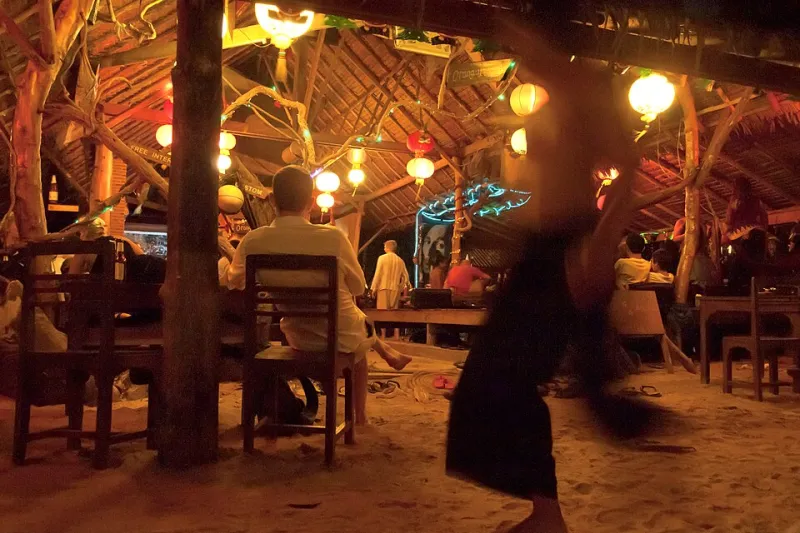
Photo: moonlit beach bar with bartender and tropical cocktails at night, via n.nordstrommedia.com
Every beach trip has a first bar. You are sunburned, thirsty, and still carrying a towel like it is a diplomatic passport. You pick the place with the clearest view of the water, the loudest music, or the shortest walk from the sand. It is fine. It is often good. But it is rarely the bar you remember six months later.
The bar you remember is usually the second one. Not the second bar of the night—the second visit to the same bar. That is when the transaction becomes a relationship. The bartender looks up and says, “Back again?” and means it as a welcome, not a warning. The crowd has thinned into something more interesting than a line. The moon is higher, the volume is lower, and the whole place feels less like a stop and more like a room you have been invited into.
The Case for Round Two
A first visit is a test drive. You are reading the menu, scanning the room, figuring out whether the frozen drinks are actually frozen or just aggressively slushy. You are distracted by your own arrival. On a second visit, you already know where to sit. You know whether to order the rum punch or the thing the guy two stools down is drinking. You know the bathroom line situation.
That familiarity changes the night. You stop performing “vacation” and start settling into it. The bartender has a beat to make a recommendation. The regulars have a beat to decide you are not a problem. And the moon—if you time it right—gets to do the thing it does best: hang over the water while everyone stops checking their phone.
This is not nostalgia. It is a travel strategy. The best seaside nights are often less about finding a hidden gem and more about giving a good bar a second chance to show you what it is like when you are not a stranger.
Three Tests for a Repeat-Worthy Bar
I use a loose three-part framework. It is not scientific. It is not meant to be. It is meant to help you decide whether to walk back down the beach tomorrow or try your luck somewhere else.
1. The Second-Drink Test
Did the bar make it easy to order a second round? I do not mean “Did they upsell you?” I mean: did the bartender ask a useful question, remember your first order, or steer you toward something better? A great beach bar can be busy and still make round two feel like the natural next step. A bad one makes you feel like you are interrupting a private conversation every time you need a lime.
If the second drink arrives with a small unprompted adjustment—less syrup, more soda, a different rum—that is a green light. If you had to wave someone down twice and the drink was already melting when it landed, consider it a one-and-done.
2. The Stool Test
Did the room make space for you? This is less about physical seats than social geometry. At a good bar, regulars nod. They do not stare. Someone might ask where you are from and actually listen to the answer. The music is loud enough to feel alive but not so loud that every conversation becomes a shouting match.
In US-accessible tropical spots—Key West, Cruz Bay in St. John, Rincón in Puerto Rico, Haleiwa on Oahu’s North Shore—the best bars often have a local rhythm you can slip into after about ten minutes. If the rhythm never opens up, you can still have a fine drink. But you probably do not need a second visit.
3. The Walk-Away Test
When you left the first time, were you already planning to come back? Or were you relieved to be moving on? Pay attention to that feeling. The walk-away test is the most honest one because it happens before you have had time to rationalize the night.
A repeat-worthy bar leaves you with a small, specific thought: I want to see this place at moonrise. Or: I want to sit at that end of the bar when it is not so crowded. A one-and-done bar leaves you with a vague shrug and a desire for pizza.
When to Fold: One-and-Done Signals
Some bars are built for volume, and that is fine. But if you are choosing where to spend a second night, watch for a few signals.
The menu is a laminated photo book and the rum list is mostly flavored. The check arrives before you ask for it. The music is so loud that the bartender has to read your lips. There is a cover charge for a bar with no live music. The only people who look relaxed are the ones who are leaving.
None of these are crimes. A beach bar can be a perfectly good first stop. But the second-round rule is about investing your limited vacation nights in places that reward a little loyalty. If the bar treats every customer like a transaction, believe it.
Where This Plays Out
Think about the Florida Keys. Duval Street in Key West is full of first-visit bars—bright, loud, and built for people who are still wearing their resort wristbands. The second visit is often better spent at a smaller spot off the main drag, where the bartender has time to explain the difference between two local rums and the sunset crowd has already thinned out.
In Puerto Rico, Rincón has a surf-town pace that rewards a return trip. The first night you find the bar with the best view. The second night you find the one where the owner remembers your name and the moon comes up over the water while someone plays a guitar badly and beautifully.
In the USVI, Cruz Bay is a ferry town with a short attention span. That is part of the charm. But the bars that deserve a second visit are usually the ones that feel a little quieter on night two—when the day-trippers have gone back to St. Thomas and the harbor lights are doing their slow blink.
And in Hawaii, the North Shore is a master class in the second-round rule. The first visit is about the view. The second visit is about the plate lunch, the local beer, and the feeling that you have found a patch of shade that belongs to you for an hour.
The Moon Does the Rest
The moon is not a gimmick. It is a timing tool. On a first visit, you are usually chasing sunset. On a second visit, you can wait for moonrise. The crowd changes. The light changes. The bar gets a little softer around the edges.
So here is the rule: do not give every bar a second chance. Give one bar a second chance. Pick the one that made round two feel easy. Go back at a different hour. Order something you did not order the first time. Let the bartender remember you. Let the crowd loosen up. Let the moon do the rest.