Your Ears Order First: How Beach-Bar Music Reveals the Night Ahead

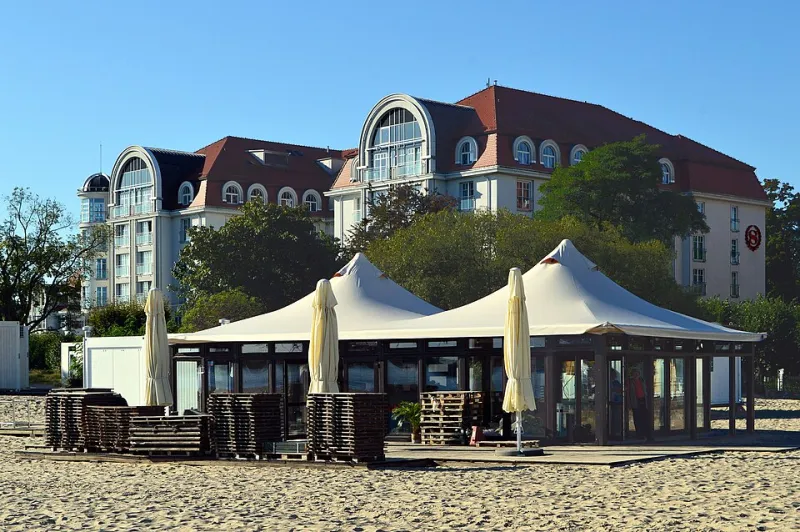
Photo: Vyacheslav Argenberg, CC BY 4.0, via Wikimedia Commons
You hear the bar before you see it. Maybe it's a lazy guitar drifting over the dunes, maybe it's a bass line rattling the shells in your pocket. Either way, the soundtrack is already doing what a host would do: sizing you up, setting a mood, and quietly telling you whether to stay for one drink or settle in until the moon is high.
Most beach-bar guides obsess over cocktail lists and sunset views. Fair enough. But music is the cheapest, fastest intelligence you can gather. It reveals the crowd, the service pace, the likely price point, and—if you listen closely—whether the kitchen closes at nine or the night is just getting started. Treat the speakers like a doorman. They're deciding who belongs.
The First Ten Seconds Tell You Most of It
Stand at the edge of the sand and just listen. Not to the song itself, but to how it's being played. Volume, tempo, and genre are three separate clues, and they rarely lie.
A bar playing acoustic guitar at a volume that lets you hear the surf is advertising a slow night. A bar playing the same guitar through speakers loud enough to cover the surf is advertising something else entirely—probably a crowd that arrived by golf cart and plans to leave by taxi.
Pay attention to the transitions, too. A real beach bar has a musical arc: mellow at four, warmer at six, and either dialed up or dialed down once the sun is gone. A bar that plays the same tempo from happy hour to last call is a bar without a plan. That's not always a dealbreaker, but it does tell you the evening will be whatever you make of it.
Acoustic and Barefoot: The Slow Lane
If you hear fingerpicked guitar, soft percussion, and the occasional cover of a song you forgot you loved, you've found the slow lane. These bars tend to attract couples, early diners, and anyone who wants a cocktail they can actually taste.
Service here is usually conversational. The bartender might ask where you're from and mean it. Drinks arrive at a human pace. That's the trade-off: nothing is rushed, including your second round. If you're hungry, order food before the acoustic set turns into a sing-along, because the kitchen tends to follow the music's lead.
This is also where you'll find the best coconut-forward drinks—the ones made with actual coconut cream rather than a pump bottle. A quiet room gives a bartender room to care. If your ideal moonlit night involves a chair, a rum drink, and a conversation that doesn't require shouting, this is your frequency.
Sunset DJs: When the Volume Is the Invitation
Then there's the other beach bar. The one where a DJ is setting up at five, the speakers are stacked on milk crates, and the crowd is already filming the horizon. Volume here isn't an accident. It's a filter. Loud music says: this is a scene, and you're welcome to join it, but you're not going to change it.
These bars move fast. Drinks are batched, garnishes are pre-cut, and the cocktail list tends toward bright, fizzy, and easy to drink in the heat. That's not a knock. A good sunset DJ set is a genuinely great way to spend an evening, and the energy can carry you straight through to moonrise.
Just know what you're signing up for. If you want a quiet table for six and a long conversation, the thumping bar is going to fight you all night. If you want to dance in the sand with strangers while the sky turns pink, you'll be miserable at the acoustic place. Match your mood to the tempo, not the other way around.
Reggae, Salsa, and the Local-Flavor Test
One of the more useful signals is how much local music the bar plays. A beach bar in Puerto Rico that leans into salsa and reggaeton is usually a bar that knows its audience—locals and return visitors alike. A bar in the Florida Keys that plays nothing but the same twenty Jimmy Buffett songs is aiming at tourists, which is fine, but it tells you the drinks will probably be sweet and the prices will probably be resort-adjacent.
Neither is automatically better. It's about expectations. Local-leaning soundtracks often come with local-leaning menus and a crowd that isn't just passing through. Tourist-leaning soundtracks come with consistency, familiar cocktails, and a decent chance your server has explained the rum list a hundred times this week. Pick the one that fits the night you want.
The Genre Whiplash Problem
Be wary of a bar that jumps from acoustic folk to EDM to country in the space of fifteen minutes. That's not eclecticism—that's a bartender with an aux cord and a grudge. Genre whiplash usually signals a bar without a clear identity, and unclear identity tends to show up in the drinks too: a menu that's trying to be everything and lands on nothing.
There are exceptions. A great beach bar can pivot from mellow to lively as the crowd changes. But the pivot should feel intentional, like a set list, not like someone scrolling through their phone.
Matching the Sound to Your Night
Here's the short version. Acoustic and soft percussion: slow drinks, good conversation, early exit or long lounge. Reggae and classic rock: steady middle ground, good for groups, usually solid food. Sunset DJs and dance music: high energy, fast service, batched cocktails, plan for a crowd. Local salsa or reggaeton: a genuine local crowd, often the best food on the beach, and a night that may run later than you expected.
Before you commit to a table, stand there for one full song. Not a chorus—a whole song. You'll learn more in four minutes of listening than you will from ten minutes of reading online reviews. And if the music makes you want to leave before you've ordered, trust that. There's another bar down the beach with your name on the playlist.
The moon doesn't care where you end up. But your ears do. Use them.