Where the Wind Sits: How to Pick the Right Stool at Any Beach Bar
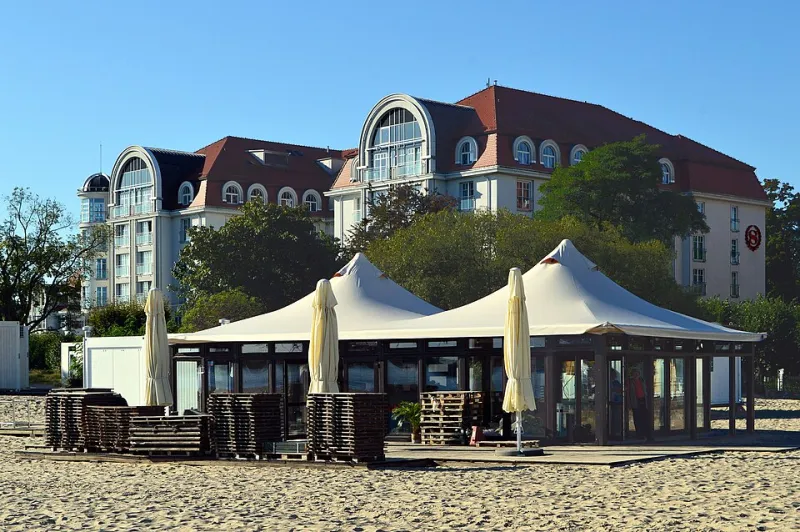
Photo: Scotch Mist, CC BY-SA 4.0, via Wikimedia Commons
Six o'clock at a beach bar is a decision point. The sun is dropping, the blender is running, and every stool in the place looks roughly the same from the doorway. They are not. A seat is a small piece of architecture, and the one you pick quietly determines whether you spend the next two hours brushing hair out of your eyes, flagging down a bartender, or watching the moon come up with a drink that never got watered down by sea spray.
You do not need a reservation or a local's secret handshake to get this right. You need about sixty seconds of observation and a rough sense of the five seat archetypes that show up at nearly every seaside bar. Here is how to read them before you commit.
Read the Room Before You Read the Menu
Stand near the entrance and look at three things: the wind, the light, and the service path. Wind shows up in napkins, hair, flags, and the direction the palm fronds are leaning. Light is not just where the sun is now—it is where it will be in forty minutes. The service path is the invisible lane bartenders and servers walk, usually between the well and the farthest tables, and it cuts through more good seats than any other force in the building.
Once you have those three readings, the room starts to sort itself into types.
Windward: The Front-Row Breeze
Windward seating takes the breeze straight on. You will feel the ocean, you will stay cooler than everyone else, and you will probably lose a paper napkin to the sea. This is the right call on a sticky night, for groups that want the full open-air energy, and for anyone who would rather be a little windswept than a little overheated.
It is the wrong call for long conversations, elaborate garnishes, or anyone wearing a dress that behaves badly in a gust. Windward stools also tend to be the ones closest to the sand, which means fine grit on the bar top by round two. Sit here if the weather is the main event.
Leeward: The Quiet Corner
Every beach bar has a sheltered side—often behind a wall, under a roof overhang, or tucked against the building. The wind drops, the sound softens, and the temperature climbs a few degrees. Couples chasing a quiet moonrise usually belong here, as do anyone who wants to actually hear the person across the table.
The trade-off is stillness. Leeward corners can get warm and buggy, especially after dark, so check for a fan or an open window before you settle in. A good leeward seat is a gift. A bad one is a sauna with a view.
Rail-Side: The Waterfront Edge
The rail is the front row—the bar top facing the water, usually with the best line of sight and the most foot traffic behind you. It is where you go for the photo, the sunset, and the feeling of sitting directly on the edge of the evening. It is also where sea spray lands, where people stop to take pictures over your shoulder, and where you are most likely to be asked to move your drink so someone can lean in.
Rail-side works beautifully for a short visit, a solo drink, or a couple who wants the view more than the conversation. It works less well for a long dinner or a group that needs room to spread out. Take the rail when the sky is the point.
Sand-Level: Shoes Off, Service Optional
Low chairs and tables set directly in the sand are the most relaxed seats in the house and the hardest to serve. You are closer to the water, closer to the ground, and further from the bartender's eyeline. This is where long, barefoot hangs happen—the kind that start with one cocktail and end with everyone ordering the same thing because nobody wants to get up.
Sit here when the plan is to stay a while and the plan does not include being efficient. Skip it if you are hungry, in a hurry, or wearing anything you care about below the knee.
Service-Adjacent: Close to the Pour
There is a seat near the well—sometimes a stray stool at the end of the bar, sometimes a small ledge by the service station—that puts you within arm's reach of the bartender. Drinks arrive fast, recommendations get better, and you can watch the cocktails get built instead of guessing what is in them. Solo travelers and cocktail curious types tend to love it.
The cost is noise and clutter. You are in the working lane, the blender is closer than your date, and the bartender's attention is a shared resource. Sit here when the bar itself is the entertainment.
The First 60 Seconds: Three Questions
Before you put your bag down at an unfamiliar beach bar, ask yourself three quick questions. First: which way is the wind blowing, and will it still be blowing that way in an hour? Second: where will the sun or moon actually land, not where it is right now? Third: where is the service path, and where is the speaker? The answers point you toward one archetype and away from two others.
If the wind is stiff and the night is warm, lean windward. If the breeze is cold or the conversation matters, go leeward. If the sky is the reason you came, take the rail. If nobody is in a hurry, sit in the sand. If you want to talk about what you are drinking, get close to the pour.
Match the Seat to the Crew
Couples do best in the leeward corner or a quiet rail spot, where the view is good and the volume is low. Groups should aim windward or sand-level, where the energy is high and nobody minds a little chaos. Solo travelers get the most out of the service-adjacent stool, and anyone planning a short, photogenic stop should take the rail before the sunset crowd fills it.
The best seat at a beach bar is not the one with the best view. It is the one that matches the night you actually want to have. Read the wind, find the light, and sit down with a little intention. The coconut cocktail tastes better when you are not fighting the room for it.