When the Tide Steps Aside: Nine Sandbar Beach Bars Worth Planning Your Night Around

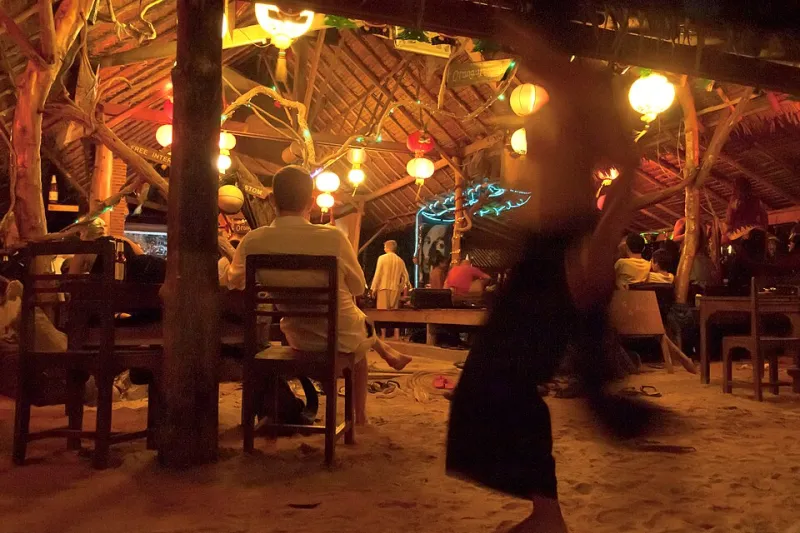
Photo: moonlit low tide sandbar with tiki torches and people wading with cocktails, via a4t.ae
There is a moment at certain beach bars when the music doesn't change, the drinks don't change, and the crowd doesn't change — but the venue does. The tide slides out, the shallows turn to wet sand, and everyone carrying a cocktail drifts off the deck and into the water. Ten minutes later the party is standing knee-deep in the Atlantic, tiki torches stuck in the sand behind them, and nobody can quite remember who decided this was a good idea.
It was the moon, obviously. And it's the best second act in beach-bar culture.
Why the party migrates when the water retreats
A low-tide sandbar is a temporary island. It shows up on a schedule, it's free to enter, and it disappears whether or not you're ready. That combination makes it feel like a secret even when forty other people are out there with you.
Most of these bars don't advertise the sandbar as an amenity, because technically it isn't one — the ocean owns it. What a good bar does is respect the rhythm: they keep a tide chart behind the bar, they know the window to the minute, and they'll tell you when to finish your drink and start walking.
Learn to read the tide table before you order
This is the whole skill, and it takes about ninety seconds to learn.
- Find the nearest NOAA tide station, not the one for the town you're staying in. Bays, inlets, and barrier islands can run thirty to sixty minutes off the regional prediction.
- Target the two hours on either side of low slack — the flat water between the outgoing and incoming tide. That's your window for dry-ish feet and easy walking.
- Check the moon phase. New and full moons bring spring tides, which means the sandbar is wider and shallower than usual — great for walking, but the water comes back faster once it turns.
- Never ignore the turn. The incoming tide on a shallow flat moves quicker than people expect. Set a phone alarm for thirty minutes before the water's due back.
Nine bars where the shallows are the second room
The Rusty Pelican Sandbar, Clearwater Beach, Florida. A Gulf-side classic with a permanent lifeguard-style tower and a chalkboard tide clock by the register. The bar pours a coconut-forward rum punch and, on low-tide nights, runs a rope line out to the bar for people who don't want to carry their drink through the surf.
Lowtide Landing, Fort Myers Beach, Florida. Rebuilt and reopened, with a sandy backyard that becomes redundant when the water pulls out. Ask the bartender for the "sandbar menu" — a short list of drinks built to survive a twenty-minute walk with one hand occupied.
The Mermaid's Ledger, St. Pete Beach, Florida. Small, older, and stubbornly unrenovated. The signature move here is a beach cart that rolls out to the sandbar at low tide loaded with a cooler and a battery-powered lantern.
Driftwood & Salt, Navarre Beach, Florida. On the Panhandle, where the sand is sugar-white and the shallows go on forever. The bar keeps loaner reef shoes behind the counter — a small gesture that makes a big difference on a shelly flat.
Coconut Moon Outpost, Gulf Shores, Alabama. Our spiritual cousin. A barefoot bar with a serious tide obsession, a rotating frozen cocktail, and a staff that will flatly refuse to serve you another round if the tide's already turned.
Sandbar Sally's, Dauphin Island, Alabama. Reachable by ferry, low-key, and best on a waxing moon. The bar's nightly ritual is a five-minute warning bell before the water returns — part practical, part theatrical.
The Shallows Club, Key West, Florida. A rooftop bar with a staircase that leads down to a flat during negative low tides. Expect a crowd, a conch-shell cocktail, and a sunset that does most of the work.
Bahía Serena Beach Bar, Rincón, Puerto Rico. West-coast sunset territory, where the sandbar walk happens at dusk rather than midnight. Order a rum-and-coconut highball and stay for the green flash, if you're lucky.
Moonlight Flat, St. Croix, USVI. The name is not subtle, and neither is the appeal: a shallow flat, warm water, and a bar that stays open late enough to make the walk back in near-darkness with a flashlight provided by the house.
What to wear, carry, and leave behind
- Footwear: reef shoes or old sneakers. Barefoot sounds romantic until you meet a broken shell at 11 p.m. Leave the flip-flops on the deck; they float off.
- Hands: one drink, one flashlight. Anything more and you're dropping something.
- Pockets: phone in a waterproof pouch, keys in a zippered pocket. Sandbars do not return lost items.
- Leave behind: glassware, cigarettes, and the assumption that the water will stay where it is.
The one rule that matters
If the bartender says the tide has turned, thank them and walk back. The sandbar will be there tomorrow night. The bar would rather see you at it.
That's the whole appeal, really — a venue that shows up, does its job for two hours, and slips away without a last call.